
What is immersive learning?
Immersive learning uses technologies such as virtual reality (VR), augmented reality (AR), and extended reality (XR) to place learners inside realistic, interactive environments. These approaches are particularly valuable where learning activities are difficult, dangerous, expensive, or impossible to replicate in traditional classroom settings.
This is often described using the DICE framework: Dangerous, Impossible, Counterproductive, or Expensive. When learning falls into one or more of these categories, immersive technologies can offer a meaningful alternative.
Beyond skills and simulation, XR can also support empathy and perspective-taking by placing learners in situations that help them better understand the experiences and challenges of others. In particular, VR can act as a powerful emotional medium by engaging multiple senses and creating a strong sense of presence.
At ATU, immersive learning is not about novelty or replacing existing teaching methods. It is about using the right technology, in the right context, for the right learning outcome.
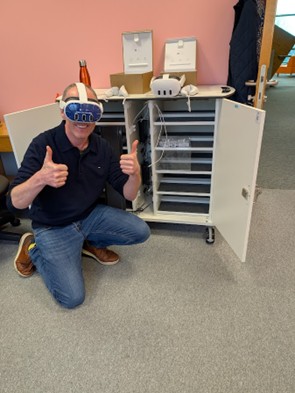
Our approach
Immersive learning at ATU is being developed through a phased, supported model, focused on:
- Small-scale pilots and experimentation (Semester 2 2026)
- Staff development and confidence-building
- Clear guidance on setup, safety and accessibility
- Collaboration with libraries, IT and academic teams
- Sharing use cases and lessons learned across disciplines
This ensures immersive learning is sustainable, inclusive and embedded into practice over time.
Areas we are exploring
As part of our initial pilots, we are exploring how immersive technologies might support learning in areas such as:
- Skills practice and scenario-based learning
- Virtual access to environments, equipment or locations
- Collaborative spaces for group work and discussion
- Visualisation of processes, systems or 3D models
- Creative and design-led learning activities where students co-create experiences.
These areas are indicative, not exhaustive, and will evolve as pilots progress and feedback is gathered.
Featured Use Cases from around ATU
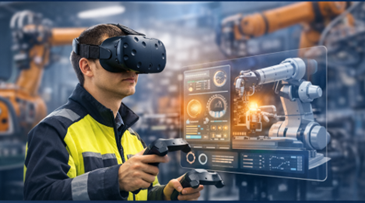
VR Automation Training
Immersive simulation for learning and practising industrial automation systems.
- Engineering
- VR
- NFQ 6–8
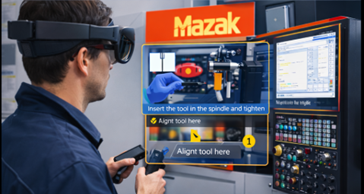
AR Operating Guides
Augmented reality guides for Mazak CNC machine operating and training
- Engineering
- AR
- NFQ 6–8